
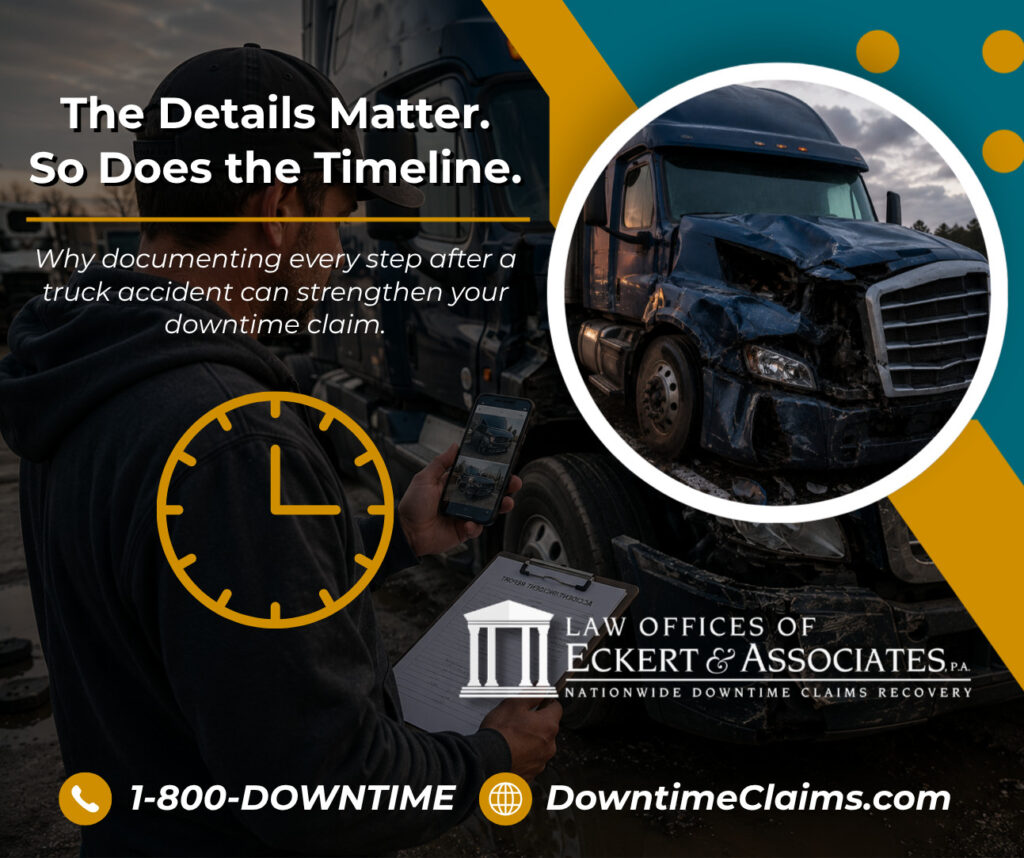
A driver called our office after a serious accident involving his truck and trailer. His vehicle was down, work had stopped, and the bills were stacking up. He wanted help recovering his downtime losses and getting the claim moving.
We asked him a simple question:
“Can you walk us through your timeline from the moment the accident happened until now?”
There was a long pause on the line.
“A timeline? ” he asked, unsure.
He knew the basics, where it happened and who hit him, but the details were fuzzy. He wasn’t sure what time the police arrived. He didn’t remember the tow company’s name. He couldn’t recall when the adjuster first called or when the truck was inspected. Some photos were taken, but they weren’t saved in order, and a few had already been deleted.
Why Timelines Matter
A timeline creates clarity.
After an accident, memories fade, stories change, and details get lost. A written and documented timeline helps preserve the facts while they are still fresh.
A strong timeline helps establish the sequence of events, confirm who knew what and when, and strengthen the credibility of a claim. It can also support damage and downtime losses while helping resolve disputes more efficiently.
Insurance carriers and attorneys rely heavily on timelines because consistency matters. When the story aligns across reports, calls, documents, and photos, claims become much harder to dispute.
The Problem With “I’ll Remember It Later”
Most people assume they’ll remember the important details later.
In reality, even within a few days, timelines blur. Names get forgotten, conversations become harder to recall, and small but important details can disappear altogether.
Opposing carriers and defense teams often look for these gaps. If your timeline changes, even slightly, they may argue that your claim is unreliable.
What Drivers Should Document Immediately After an Accident
For drivers, especially commercial drivers and owner-operators, building a timeline should begin at the scene and continue through repairs and downtime.
Start by documenting the exact time and location of the accident, including the road, direction of travel, weather conditions, visibility, and traffic situation.
It’s also important to document everyone you speak with after the incident, including police officers, other drivers, witnesses, tow operators, dispatch teams, insurance representatives, repair shops, and adjusters. Record names, company details, phone numbers, and a brief note about what was discussed.
Major Events to Track
Create a simple running log of important milestones, including:
- Time police arrived
- Time vehicle was towed
- When the claim was reported
- When the adjuster first contacted you
- When the vehicle was inspected
- When repairs started
- When repairs were completed
- When the truck returned to service
Order matters. Sequence matters.
The Power of Time-Stamped Photos and Videos
Photos and videos are some of the strongest timeline tools available today.
This evidence can often be more powerful than a written statement made weeks later because it captures the exact condition of the scene in real time. Drivers should secure dashcam footage, and take photos and videos of: vehicle positions, damage from multiple angles, license plates, placards, road and weather conditions, skid marks, debris, trailer connections, cargo securement, dashboard warning indicators and tow setups.
These details can help support the severity of the impact, vehicle condition, visibility, and the circumstances surrounding the accident.
How Timelines Support Downtime and Loss-of-Use Claims
Timelines are especially important when downtime claims are involved.
They help document the full picture, including repair delays, parts wait times, inspection gaps, and shop scheduling issues that contributed to the truck being out of service.
Insurance carriers often challenge downtime claims. A detailed timeline showing every step, from the accident through repairs and return-to-service, helps demonstrate that the downtime was real, necessary, and properly documented.
Without a clear timeline, important portions of a claim may be questioned or reduced.
With one, the facts become easier to support.
How We Use Timelines in Our Office
In our work, timelines help verify accident facts, track claim handling delays, document repair duration, and preserve communication history.
When clients provide strong documentation, including timelines, photos, repair records, and contact logs, it helps strengthen the claim and creates a clearer path toward resolution.
Final Thoughts
After an accident, details disappear faster than most people expect.
A timeline is one of the simplest but most powerful tools drivers can use to protect themselves, preserve critical information, and support downtime-related claims.
The sooner you start documenting, the stronger your position may be.
Need Help With a Truck Downtime Claim?
If your truck is out of service after an accident, every day off the road can impact your business.
Eckert & Associates, P.A. helps owner-operators and fleets pursue recovery for commercial vehicle downtime and loss-of-use claims.
Visit DowntimeClaims.com or call 1-800-DOWNTIME to learn more.

Lejuan Williams is a committed case manager at Eckert & Associates, bringing extensive experience in claims handling and a strong dedication to advocating for truckers, the backbone of America’s economy. His background includes years of expertise in the insurance and legal industries, where he developed a deep understanding of claims processes and client needs.

