

Executive Summary
Per diem is one of the most practical tax tools available to owner-operators and small trucking companies. When used correctly, it allows you to reduce taxable income without complicated recordkeeping.
For 2026, the IRS per diem rate is $80 per day, and 80% of that amount is deductible.
Most drivers are surprised how much this adds up over the course of a full year.
This article explains:
- What per diem is and how it works
- How it applies to owner-operators and small fleets
- How much you may be able to deduct
- Common mistakes to avoid
Note: This is general information only. You should consult a qualified tax advisor about your specific situation.
Who This Is For
If you run a trucking company with 1 to 20 trucks—or you’re a solo owner-operator—this applies to you.
- You file taxes as an owner-operator (Schedule C), or
- You have drivers on payroll and want to understand how per diem works
What Is Per Diem?
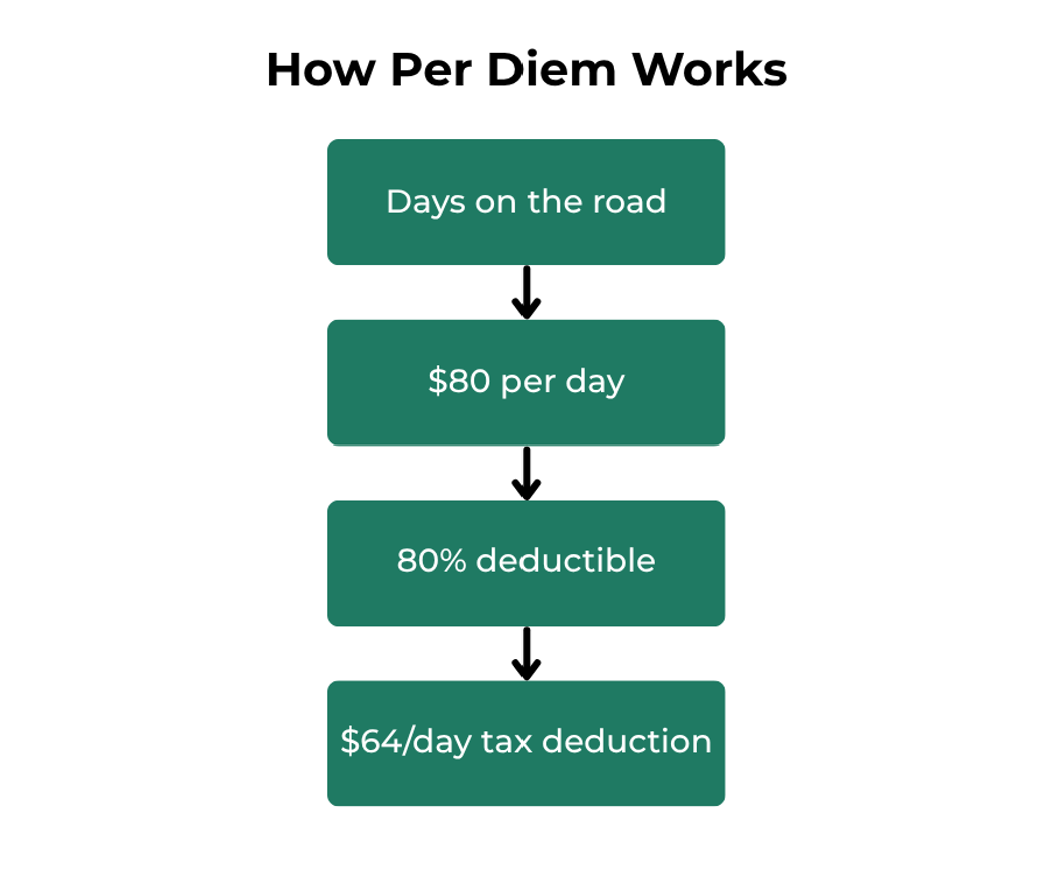
Per diem is a daily allowance set by the IRS for meals and incidental expenses when you are working away from home overnight.
Instead of tracking receipts for every meal, truck drivers can use a standard rate of $80 per day.
However:
- Only 80% of the per diem amount is deductible
So in practical terms:
- $80 per day × 80% = $64 per day deduction
This is more favorable than most other industries, which are generally limited to a 50% meal deduction.
How Per Diem Reduces Taxes
Per diem reduces your taxable income.
Lower taxable income generally means:
- Less income tax
- And for owner-operators, potentially less self-employment tax
Example
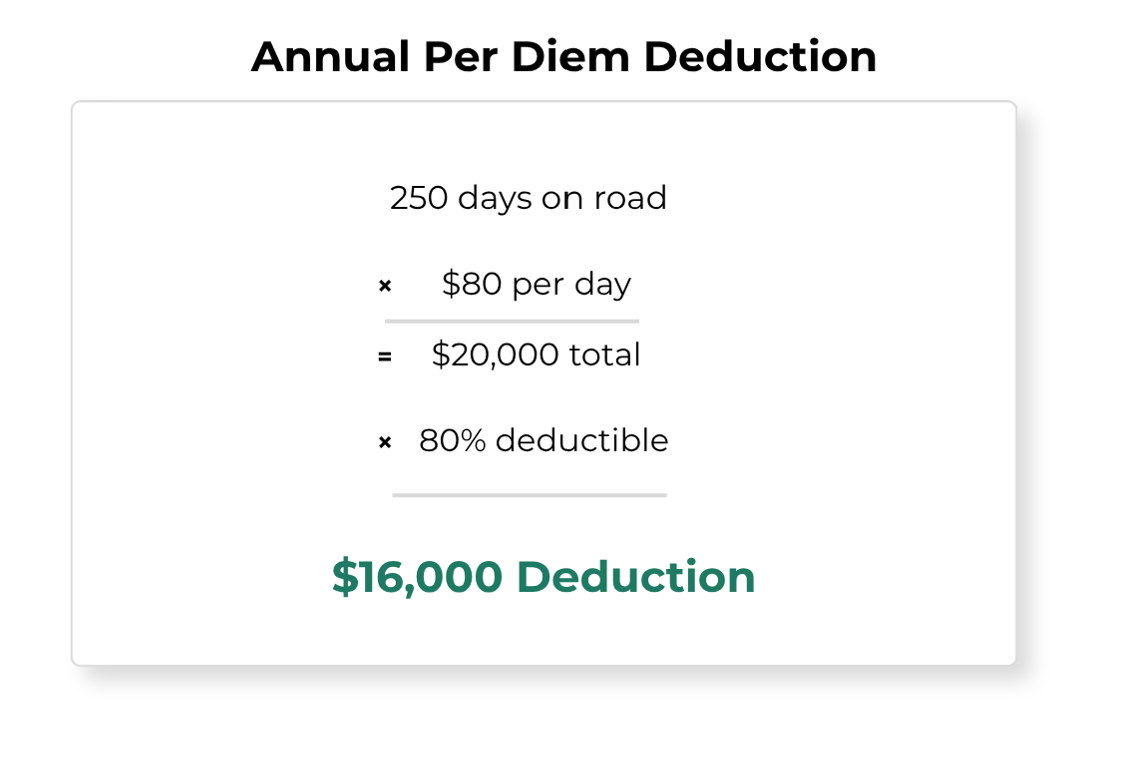
If you are on the road 250 days per year:
- 250 × $80 = $20,000 total per diem
- $20,000 × 80% = $16,000 deductible
That $16,000 reduces your taxable income, which can lead to meaningful tax savings depending on your situation.
Per Diem for Owner-Operators (Schedule C)
If you are an owner-operator:
- Per diem is taken as a business expense on Schedule C
- You do not need meal receipts
- You must be away from your tax home overnight
What Matters Most
- You need a reliable count of days on the road
- The travel must be business-related
- You must maintain basic supporting records
Used correctly, this is one of the more straightforward deductions available to owner-operators.
Per Diem for Company Drivers (W-2 Employees)
For W-2 drivers, the rules are different.
- Most drivers cannot deduct per diem on their personal tax return
However, some companies offer a per diem pay program, which:
- Treats part of wages as a non-taxable reimbursement
- Reduces taxable wages on the W-2
- Increases take-home pay
Trade-Offs to Understand
Lower taxable wages can affect:
- Social Security earnings
- Workers’ compensation calculations
- Unemployment benefits
These trade-offs are not necessarily negative, but they should be understood before participating in a program.
Per Diem for Small Fleets (1–20 Trucks)
If you run a small fleet, per diem can impact both your business and your drivers.
You may be able to:
- Reduce payroll-related taxes
- Increase driver net pay without increasing gross pay
- Simplify how meal expenses are handled
Important Consideration
Per diem programs must be:
- Properly structured
- Clearly documented
- Consistently applied
Improper setup is where most compliance issues arise.
Common Per Diem Mistakes to Avoid
- Not Tracking Overnight Travel Days
You must be able to support the number of qualifying days.
- Assuming 100% Is Deductible
Only 80% of per diem is deductible.
- Including Non-Qualifying Travel
You must be away from your tax home overnight for the deduction to apply.
- Poor Payroll Setup (for Fleets)
Incorrect handling can create compliance and reporting issues.
- Not Getting Professional Guidance
Per diem interacts with tax, payroll, and compliance rules—details matter.
Final Thoughts
Per diem is a straightforward concept, but the details matter.
For owner-operators, it can be a consistent way to reduce taxable income.
For small fleets, it can influence payroll structure and driver pay.
In both cases, the benefit comes from applying the rules correctly and maintaining proper records.
As always, consult your tax advisor before making changes. If you do not currently work with one, consider speaking with a professional who understands trucking-specific tax rules.
Frequently Asked Questions (FAQ)
What is the per diem rate for truck drivers in 2026?
For 2026, the IRS per diem rate for truck drivers is $80 per day, and 80% of that amount is deductible for tax purposes.
This means each qualifying day on the road can generate a $64 tax deduction. Over a full year, this can add up to a significant reduction in taxable income.
Do I need receipts to claim per diem?
No. You do not need meal receipts when using the standard per diem rate.
Instead, you need to maintain a reliable record of your qualifying travel days, including confirmation that you were away from your tax home overnight for business purposes.
Can owner-operators take per diem?
Yes. Owner-operators filing a Schedule C can typically deduct per diem as a business expense if they meet the requirements.
At Superior Trucking Payroll Service, we often see owner-operators miss this deduction or apply it incorrectly due to confusion around the rules—especially the overnight requirement.
Can W-2 drivers deduct per diem on their taxes?
In most cases, no. W-2 drivers generally cannot deduct per diem on their personal tax return under current tax law.
However, they may benefit from employer-sponsored per diem pay programs that increase take-home pay by reducing taxable wages.
Why is trucking per diem different from other industries?
Truck drivers are allowed an 80% deduction, while most other industries are limited to 50% for meal expenses.
This reflects the nature of trucking, where drivers are regularly traveling and away from home for extended periods.
How many days can I claim per diem?
There is no fixed limit, but each day must meet the requirements:
- You were working
- You were away from your tax home
- The trip included an overnight stay
Many full-time drivers fall in the 200–300 day range, but the key is having accurate records to support your claim.
Can I start using per diem in the middle of the year?
Yes, in many cases you can begin using per diem mid-year.
For owner-operators, this typically means:
- Starting to track qualifying days going forward
- Applying the deduction for the portion of the year it applies
For companies implementing a per diem pay program:
- Changes can often be made prospectively
- Proper setup and documentation are important before starting
At Superior Trucking Payroll Service, this is a common question we see, especially from companies that realize mid-year that they may not be taking advantage of per diem correctly.
Is per diem worth it?
For many owner-operators and small fleets, yes.
When applied correctly, per diem can result in meaningful tax savings and improved take-home pay. The key is understanding the rules and keeping proper records.
Learn More About Per Diem
If you want to go deeper on how per diem applies to your specific situation, including examples and common setup approaches, you can learn more here:
What Happens When Your Payroll Company Doesn’t Understand Per Diem
If you have questions about how this applies to your business or your drivers, you can also reach out directly here:

Helping owners of 20–80 truck fleets reduce chaos through payroll, systems, and clarity | President, Superior Trucking Payroll Service

